

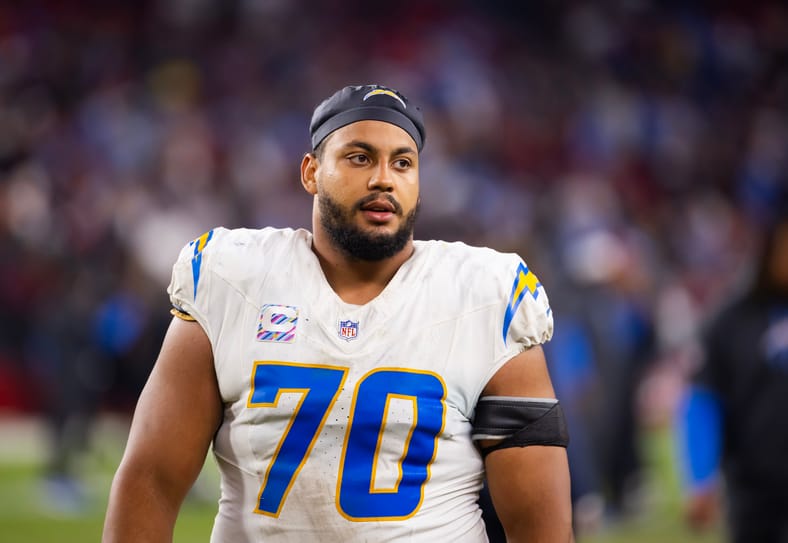
Less than two weeks after signing a record-setting four-year, $114 million contract extension with the Los Angeles Chargers, offensive tackle Rashawn Slater suffered a devastating leg injury during a team practice. The injury, which occurred during the team portion of Thursday’s practice, involved Slater’s left leg and led to him being carted off the field, visibly shaken but receiving support from teammates.
At just 26 years old, Slater had firmly established himself as one of the NFL’s premier offensive linemen. He started 15 games last season, earned his second Pro Bowl selection, and quickly rose to stardom since being drafted in 2021. The recent extension, with $92 million guaranteed, made him the highest-paid offensive lineman in the league by average annual value.
However, the timing of the injury—shortly after securing his lucrative contract—has sparked conversations about the risks players face after holding out during contract negotiations, and the importance of a careful acclimation period before returning to full practice and gameplay.
The Danger of Returning Too Quickly After Hold-Ins
When a player holds out during contract talks, it serves as a protective measure against injury before securing a new deal. Yet, a league source recently told Pro Football Talk’s Mike Florio that data suggest injuries can become more likely once a hold-in ends if players return to full duties without a gradual adjustment period. This shows critical balance: both the player and team must carefully manage the transition back to heavy workloads.
Florio explained, “The data should not be dismissed,” pointing to the need for teams and players to be strategic about post-hold-in activity. “The player’s mindset shouldn’t be, ‘I got my deal and I’m ready to go.’ The team needs to be aware of that, too.”
This cautionary advice is particularly relevant given Slater’s situation. While he secured a lucrative contract extension, his torn patellar tendon—and the resulting loss of the entire 2025 season—raises the question of whether a more deliberate, phased return to full participation might have prevented the injury.
A Wider Issue Across the League
Slater’s injury isn’t an isolated case. Several prominent NFL players currently holding out during contract negotiations face similar risks. Cowboys linebacker Micah Parsons, Commanders receiver Terry McLaurin, Bengals defensive end Trey Hendrickson, Bills running back James Cook, and Steelers defensive lineman Cam Heyward are among those practicing less or not at all while talks continue. All must navigate the challenge of balancing contract security with physical readiness.
While securing a contract is a major milestone, it’s only the first step in staying healthy and competitive. The physical demands of the NFL require careful management, especially after any period of reduced activity.
Looking Ahead For The Chargers
The Chargers have yet to provide a detailed update on Slater’s prognosis, but the injury is undeniably a significant setback for both the player and the team. It serves as a cautionary tale about the importance of acclimation and workload management following hold-ins, which should be a priority for all teams managing high-profile players amid contract negotiations.
For Slater, a promising career now faces a challenging recovery. For the Chargers and the league, the injury is a stark reminder that the transition from contract hold-in back to the rigors of NFL play must be handled with patience and care to protect players’ health and careers.
Subscribe to LAFB Network’s Los Angeles Chargers YouTube Channel