

Los Angeles Rams second-year pass rusher Jared Verse’s 2025 season is easy to summarize statistically and much harder to define on film. By the numbers, the Rams’ edge rusher was one of the most productive defenders in football. On tape, the story is more complicated — and as the competition has stiffened, the limitations have become harder to ignore.
That tension was at the center of a recent discussion on the Read Optional Podcast, where analysts Jon Ledyard and Ollie Connolly offered a more skeptical lens on Verse’s impact, particularly in high-leverage matchups.
“I didn’t feel like Jared Verse dominated that matchup,” Ledyard said. “It feels like he’s kind of running out of steam here at the end of the season — but also bumping up against the limitations of a player who may not be able to build off the bull rush.”
That critique cuts to the heart of Verse’s evaluation.
Subscribe to LAFB Network’s Los Angeles Rams YouTube Channel
The Production Is Real — and Consistent
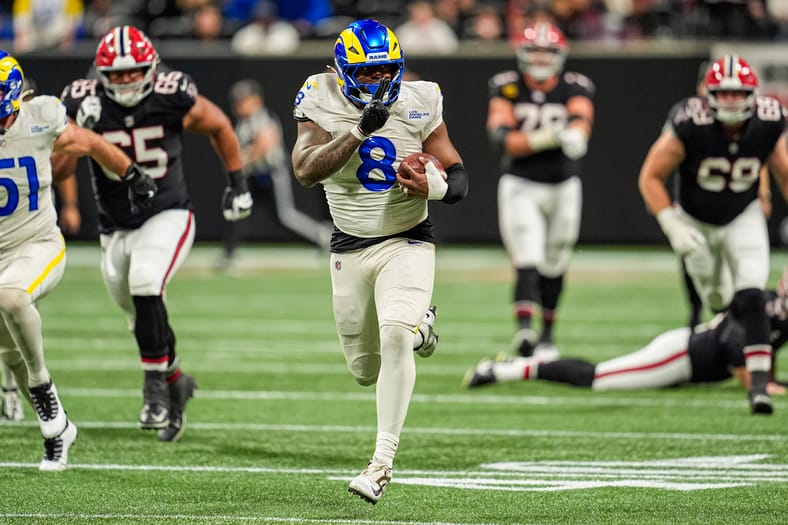
There’s no denying Verse’s regular-season output. Across 17 games, he logged:
- 72 total pressures (5th most in the NFL)
- 14.5% pressure rate (15th among qualified edge rushers)
- 7.5 sacks
- 11 tackles for loss
- 58 total tackles
Verse recorded at least two pressures in every single game, a level of week-to-week consistency that few edge defenders can match. His workload was equally notable — 498 pass-rush snaps, third-most among NFL edge rushers, reflecting both durability and trust from the Rams’ coaching staff.
From a volume standpoint, Verse looked like a frontline pass rusher. From an efficiency standpoint, he landed squarely in the middle tier.
Support Local and Independent Sports Writing – Subscribe To the LAFB Network Today!
“Proximity Pressure” vs. Real Disruption
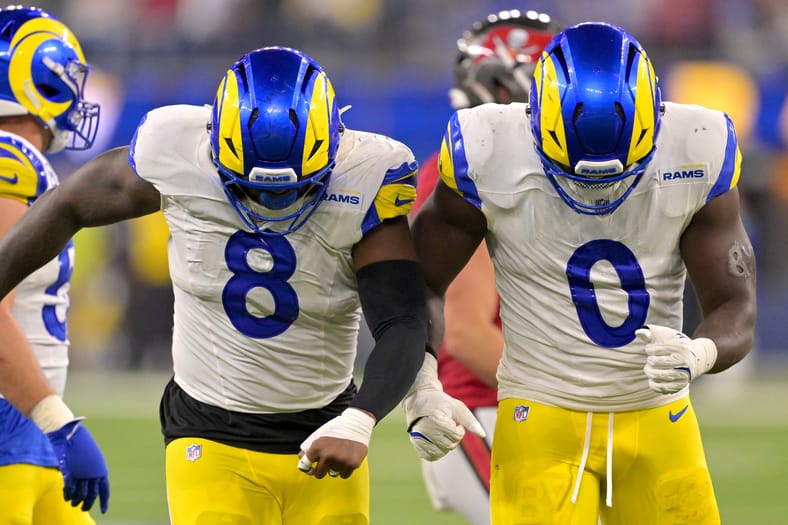
Ledyard’s critique wasn’t about effort or strength. It was about how Verse wins.
“The charting numbers say the pressures are great,” Ledyard explained, “but they’re what I’ve been calling proximity pressures. He pushes the tackle into the quarterback’s space — that’s not the same as beating someone clean.”
That distinction matters. Verse’s game is still heavily reliant on power and momentum. When the bull rush lands cleanly, he’s disruptive. When it doesn’t — particularly against tackles who can absorb force without panicking — the rush often stalls.
Once that tendency shows up on tape, the margin for surprise disappears.
“You’re just not going to walk everybody in the league back,” Ledyard said. “Part of strength is surprise, and the margins are too thin in the NFL.”
The numbers support that concern. Verse converted just 10.4% of his pressures into sacks, well below that of elite pass rushers, who typically convert between 15–20%.
This Puka-Flex T-Shirt Is Illegal In Philly
Why Matchups Matter More Than Ever
Ollie Connolly echoed that point, shifting the focus from individual traits to usage.
“They’re going to have to be smarter about finding him matchups,” Connolly said. “Just locking him in one spot — even if they move him around — feels more like a way to keep him engaged than a true third-down plan.”
Verse’s production has fluctuated sharply depending on the opponent. Against Arizona late in the season, he spiked to a 23.8% pressure rate. Against San Francisco, he struggled in both matchups, never clearing 10%.
The takeaway isn’t that Verse can’t rush — it’s that his rush isn’t universal. Without a true counter or finishing move, he needs favorable alignments to fully tilt games.
Playoffs: More Pressure, Same Problem
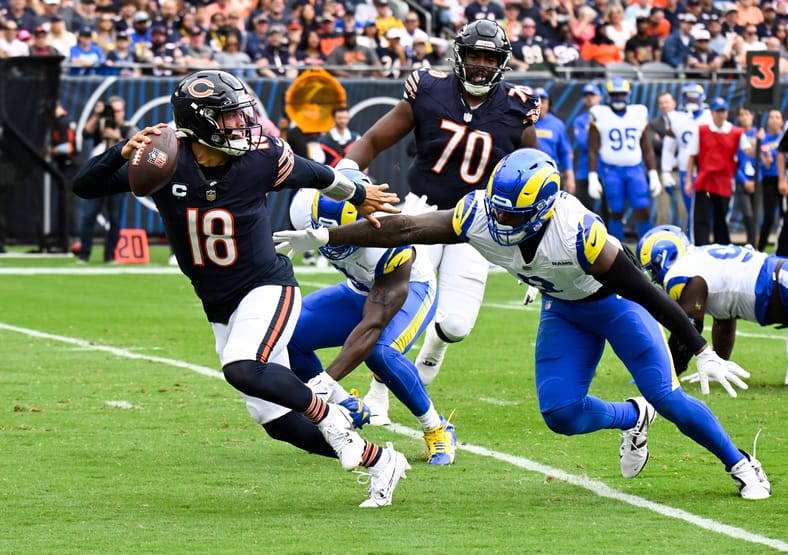
Through two playoff games, Verse’s role has actually expanded. His postseason workload jumped to 36.5 pass-rush snaps per game, and his pressure rate rose slightly to 15.1%, above his regular-season average.
Against Carolina and Chicago combined, he generated:
- 11 pressures
- 2 tackles for loss
- 0 sacks
That last number stands out. Despite consistent pressure, Verse still hasn’t delivered the defining play — the third-down sack, the drive-killing moment — that separates solid rushers from game-wreckers in January.
His run defense has also been quieter, with a reduced tackle rate compared to the regular season, even as his snap count increased.
The Verdict: Very Good, Not Yet a Difference-Maker
Jared Verse is not a disappointment. He’s durable, consistent, and productive. Few edge defenders can say they impacted every game across a full season the way he did.
But the criticism is fair.
Against elite offensive lines and in the highest-stakes moments, Verse too often affects the pocket without finishing the play. His rush plan narrows. His wins rely on force rather than craft. And once opponents settle in, the disruption becomes easier to manage.
In the long term, that doesn’t make him a liability. It makes him unfinished. In the short term, the Rams’ defense will be lacking a crucial component of Super Bowl-winning football.
For the Rams, the next step isn’t more effort or more snaps. It’s refinement — better matchup hunting, expanded counters, and a finishing move that turns pressure into punctuation. In addition, it means they should continue to bolster the position via the draft or by adding a veteran complementary pass rusher to take the burden off Verse.
Until then, Verse remains what the numbers — and the tape — both suggest:
a very good edge rusher still searching for the trait that makes great ones inevitable.