

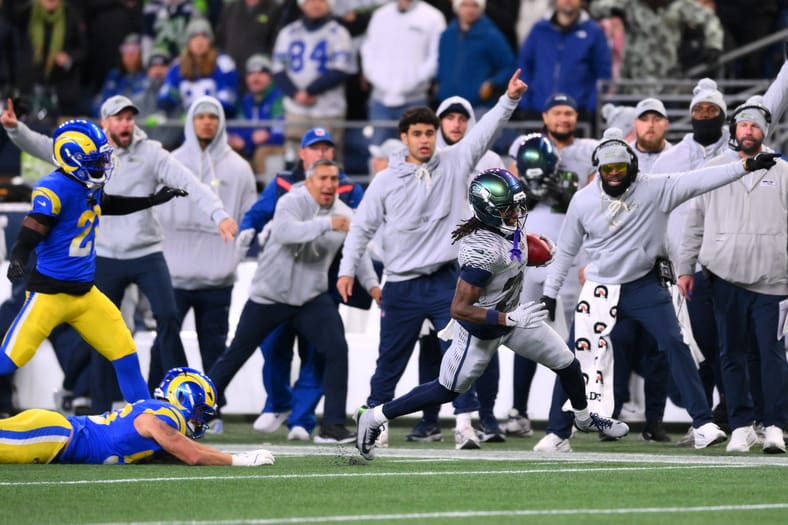
The Los Angeles Rams were on the doorstep of a defining road win Thursday night in Seattle. Instead, a stunning fourth-quarter collapse turned a 16-point lead into a 38–37 overtime loss to the Seahawks, one that reshaped the NFC West race and exposed two lingering concerns for an otherwise playoff-caliber team.
While the Rams remain firmly in the postseason picture, ESPN analyst Mina Kimes pointed to structural weaknesses that surfaced at the worst possible moment: special teams and a defense that lives and dies by pressure.
Subscribe to LAFB Network’s Los Angeles Rams YouTube Channel
Special Teams Gap Shows Up in the Biggest Moments
Support Local and Independent Sports Writing – Subscribe To the LAFB Network Today!
Kimes described the disparity bluntly during ESPN’s postgame coverage, calling attention to what she termed “the special teams discrepancy” between Seattle and Los Angeles.
“Seattle is second league-wide in special teams DVOA,” Kimes said. “The Rams are 25th I believe, near the bottom of the NFL. And that’s not just the kicker, who obviously missed a kick. But as you saw, the coverage as well. We don’t talk about special teams ever. But when really good football teams play close games, it matters.”
The numbers support her point. The Rams currently rank 30th in special teams EPA per play and 25th by DVOA, placing them among the league’s least efficient units in hidden-yardage situations. That gap materialized in the fourth quarter when Seattle’s Rashid Shaheed ripped off a 58-yard punt return touchdown, flipping momentum after a Rams interception appeared to seal the game.
In tight playoff-style contests, one coverage lapse or missed kick can erase three quarters of strong football. Thursday night was a textbook example.
Get LAFB’s World Famous ‘Ring Me’ Aaron Donald T-Shirt
A Defense That Requires Pressure to Thrive
Kimes also highlighted another trend that opponents have increasingly tested.
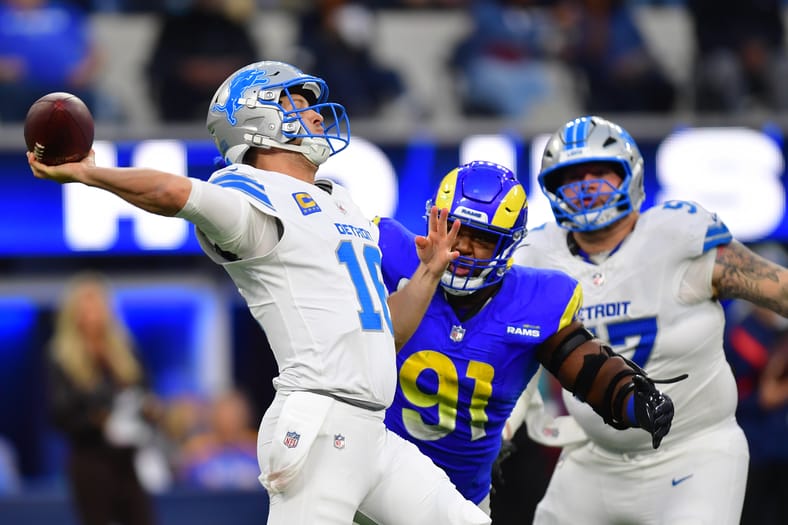
“The Rams defense has been very good,” she said, “but they are very dependent on their pass rush.”
That dependency shows up clearly in the data. When Los Angeles generates pressure, its defense allows the fourth-lowest QBR in the NFL and posts elite efficiency metrics. When it doesn’t, the performance drops sharply into bottom-tier territory.
With pressure, the Rams produce a 31 percent defensive success rate and a dominant –0.443 EPA per play. Without pressure, that success rate falls to 51.5 percent, and EPA swings to +0.174, meaning opposing offenses are gaining expected points.
As Kimes noted, when quarterbacks are kept clean, “there’s places you can attack in the secondary.”
Seattle exploited that late, converting three two-point attempts and finishing the game with consecutive touchdown drives once protection stabilized.
Manageable Issues — But No Longer Invisible
Kimes was careful to frame her critique with context.
“This is still an extremely good football team and still a Super Bowl favorite,” she said.
But Thursday’s collapse underscored how narrow the Rams’ margin can become when special teams falter and the pass rush stalls. In January football, those aren’t minor details — they’re pressure points opponents will deliberately test.
For a team built to contend now, the answers to those questions may define how far this season ultimately goes.