

The Los Angeles Rams coaching staff didn’t just get another offensive mind. They made another Sean McVay-style investment in perspective.
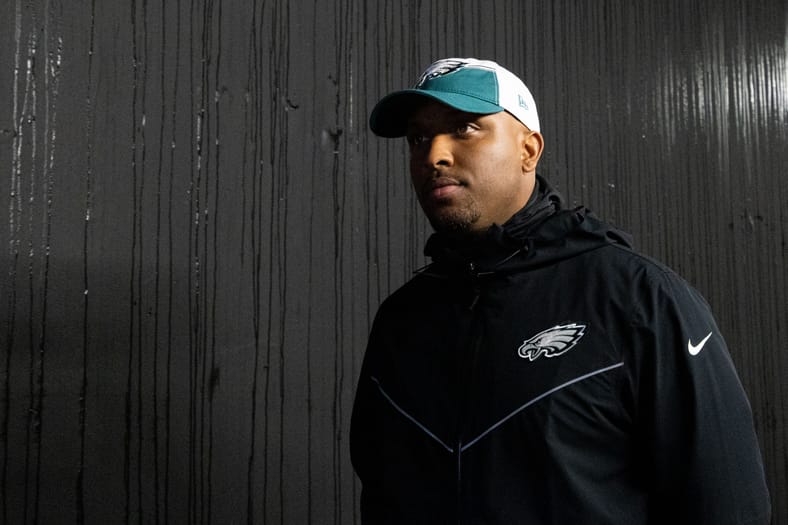
With the addition of Brian Johnson as a senior offensive assistant but under the heading of the defensive staff, head coach Sean McVay is once again leaning into a strategy that has quietly become one of the defining traits of his program: importing high-level thinkers from the opposite side of the ball to stress-test his own team.
It’s a move that mirrors the Rams’ 2024 addition of Sean Desai, the former defensive coordinator of the Philadelphia Eagles, who arrived not to run a unit — but to challenge assumptions, refine structure, and accelerate growth behind the scenes.
Now, McVay is running the same experiment again.
This time, the subject is the Rams’ defense.
Subscribe to LAFB Network’s Los Angeles Rams YouTube Channel
Rams Coaching Staff: A Pattern, Not a One-Off
Support Local and Independent Sports Writing – Subscribe To the LAFB Network Today!
Desai’s 2024 role was intentionally unconventional. He served as a senior assistant embedded across the operation, helping first-year defensive coordinator Chris Shula with game-planning structure, film study, and situational adjustments.
The results were tangible:
- Defensive metrics improved across the second half of the season in:
- Total yards allowed
- Passing yards allowed
- Rushing yards allowed
- Points allowed
- The Rams rebounded from a 4–5 start to finish 10–7 and win the NFC West.
- Desai even contributed to offensive structure, helping shape a passing attack that finished 10th in net passing yards per game (227.5).
That cross-pollination wasn’t accidental. It was McVay building what amounts to a coaching think tank.
Johnson’s hiring signals the Rams believe that approach worked — and can work again.
Get your Puka-Flex T-Shirt Here
Why Brian Johnson? Follow the Offensive Profile
Johnson’s lone season calling plays in Philadelphia was often criticized externally, but the production tells a different story.
2023 Eagles Offense Under Johnson
- 8th in points per game
- 9th in yards per game
- 6th in success rate
- 7th in EPA per play
- 10th in DVOA
Even more telling: that offense ranked 7th in cash spending, meaning it wasn’t simply talent-driven efficiency.
Johnson’s system emphasized:
- Run-pass options (RPOs)
- Heavy play-action integration
- A balanced run/pass structure designed to force defensive hesitation
That structure stressed defenses horizontally and vertically — exactly the kind of offense the Rams struggled to defend in 2025.
After Philadelphia, Johnson helped develop a young offense with the Washington Commanders, where he worked with new Rams assistant head coach Kliff Kingsbury. With Washington, he contributed to quarterback Jayden Daniels’ early success while maintaining respectable efficiency despite injuries and backup quarterback play.
In other words: Johnson’s value isn’t just play-calling. It’s understanding how modern offenses attack structure.
The 2025 Rams Defense Had Specific Problems — Johnson Has Seen Them From the Other Sideline
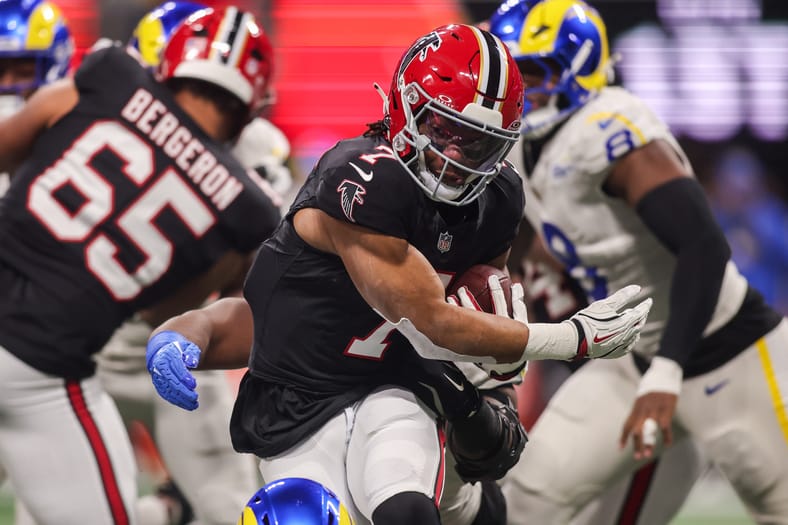
If you want to know why this hire matters, look at where the Rams were vulnerable last season.
1. Play-Action Was a Major Stress Point
- Rams allowed +0.246 EPA per play vs play-action
- Compared to –0.0098 EPA on standard dropbacks
- Completion rate jumped to 71.5% against play-action looks.
That 0.256 EPA swing is the difference between elite defense and exploitable defense.
Johnson’s offenses were built on manufacturing exactly those reactions.
2. Limited Exposure to RPOs — But Poor Results When Tested
- Rams faced RPOs on just 7.4% of snaps
- Allowed an 80% completion rate when opponents threw off them.
That suggests not mastery — but unfamiliarity.
Johnson coached one of the league’s most RPO-heavy systems.
3. Discipline and Finish Were Issues
- Rams allowed 1,844 yards after contact
- Averaged 3.20 yards after contact per play
- 26 plays allowed 10+ yards after contact.
That reflects hesitation and misreads — the exact conflict that Johnson designed to create.
This Is McVay Building Answers Before the Questions Arrive
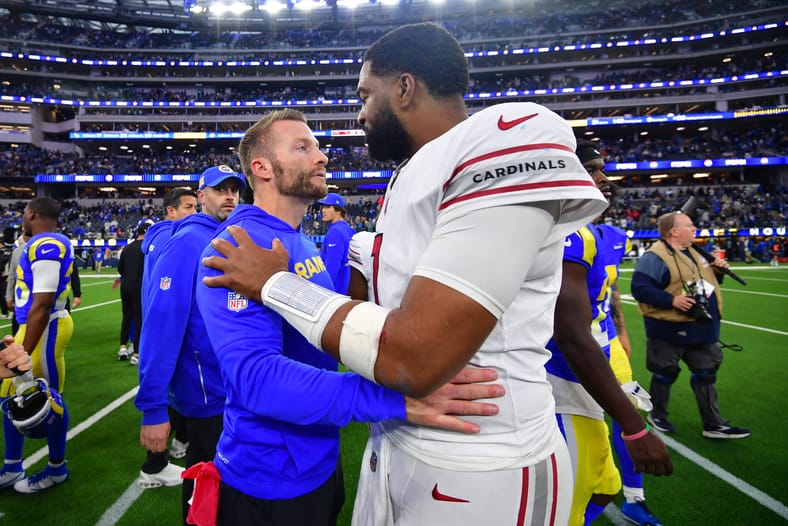
McVay has long believed that self-scouting must come from outside voices — especially ones recently tasked with beating your system.
Desai helped stabilize a young defensive staff in 2024.
Johnson now becomes the offensive mind embedded to:
- Diagnose how modern offenses manipulate coverage rules
- Help defenders recognize RPO and play-action indicators faster
- Stress-test game plans during install
- Translate offensive intent into defensive anticipation
It’s less about adding plays and more about adding clarity.
A “Rehab Year” Model — That’s Actually a Competitive Advantage
Around the league, these roles are often framed as reset opportunities for displaced coordinators.
With the Rams, they’ve become something else:
A deliberate way to import high-level strategic intelligence without disrupting the coaching hierarchy.
McVay isn’t just hiring assistants.
He’s building a rolling advisory board of former coordinators who understand how elite units attack NFL defenses — and turning that knowledge inward.
What It Means for 2026
If Desai’s stint helped stabilize the structure, Johnson’s could sharpen anticipation. For a Rams team trying to contend while reshaping its roster, that kind of marginal gain matters.Because in today’s NFL, innovation isn’t always about new schemes.
Sometimes it’s about seeing your own weaknesses through the eyes of the coach who used to attack them.
And once again, the Rams are betting that perspective is worth hiring.