

The Los Angeles Chargers wasted little time reshaping their offensive staff after a disappointing playoff exit. On Tuesday, the team announced it had parted ways with offensive coordinator Greg Roman and offensive line coach Mike Devlin, signaling a clear pivot as Jim Harbaugh enters a critical offseason.
The move came one night after the Chargers managed just three points in a Wild Card loss to the New England Patriots — a performance that underscored mounting questions about offensive ceiling, adaptability, and fit around franchise quarterback Justin Herbert.
Asked directly after the loss whether Roman was the right play-caller for the job, Harbaugh was candid.
“I don’t have that answer right now.”
He has it now.
With Herbert’s prime years looming and the Chargers still very much in a championship window, the next offensive coordinator hire will shape the franchise’s trajectory. Here are six candidates who make sense — each for different reasons.
Support Local and Independent Sports Writing – Subscribe To the LAFB Network Today!
1. Mike Kafka — Giants Interim Head Coach
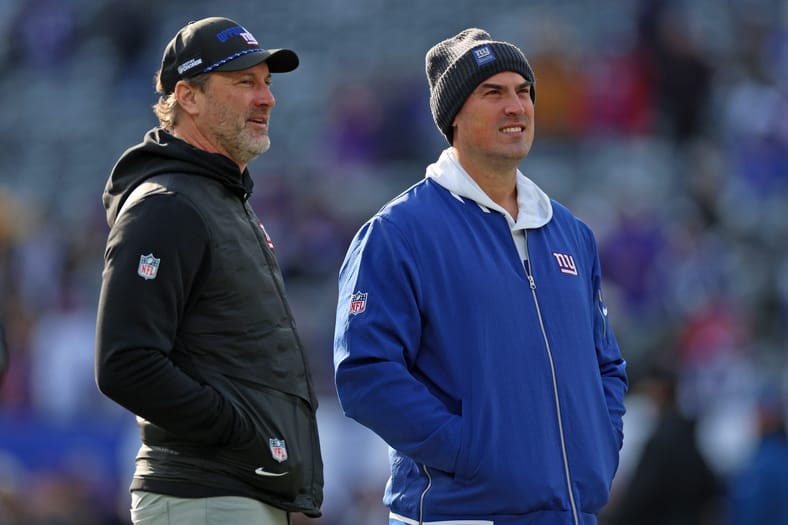
Kafka’s name has circulated in head-coaching and coordinator cycles for several years, and for good reason. A former NFL quarterback, Kafka developed under Andy Reid in Kansas City, where he helped guide Patrick Mahomes through an MVP season and a Super Bowl run.
His background blends structure with creativity. After joining the Giants in 2022, Kafka helped engineer their first playoff win in more than a decade and earned widespread respect for maximizing limited offensive talent. Even amid turbulence in New York, his work with quarterbacks — most recently Jaxson Dart — reinforced his adaptability.
Kafka has interviewed for multiple head-coaching roles over the past three seasons, and his experience managing adversity could appeal to Harbaugh as the Chargers look for a stabilizing yet progressive offensive voice.
Is Jim Harbaugh The Real Life Ted Lasso?
2. Thomas Brown — Patriots Passing Game Coordinator
Brown has quietly built one of the strongest résumés among rising offensive minds. This season in New England, his concepts helped unlock Drake Maye, turning the rookie into an MVP candidate while effectively deploying a diverse skill group that included Stefon Diggs, Hunter Henry, and Kayshon Boutte.
Previously, Brown served as offensive coordinator in Carolina and was voted one of the league’s top offensive coordinators in an NFLPA player poll — a rare and telling endorsement.
His connection to the Rams’ Super Bowl LVI staff adds intrigue. Brown played a key role in an offense that ranked top-10 in scoring and balance, and his running back background has consistently translated into efficient, adaptable systems.
3. Davis Webb — Broncos Passing Game Coordinator / QB Coach
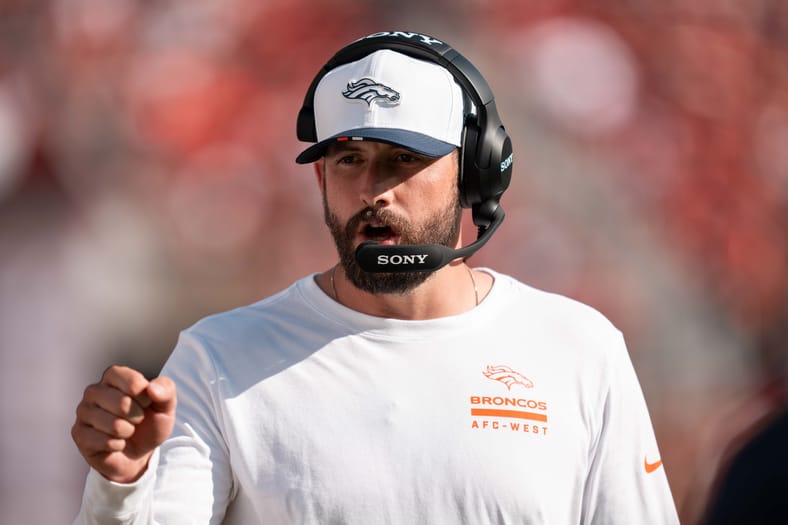
Another former quarterback turned coach, Webb has quickly gained traction in league circles. After transitioning from a six-year NFL playing career, Webb joined Sean Payton’s staff in Denver and has been instrumental in Bo Nix’s development.
Webb’s ability to translate quarterback mechanics into game-ready concepts has already earned him interviews during this hiring cycle. His youth, relatability, and schematic alignment with modern NFL trends could appeal to a Chargers organization eager to evolve offensively without losing structure.
Subscribe to LAFB Network’s Los Angeles Chargers YouTube Channel
4. Nate Scheelhaase — Rams Passing Game Coordinator
Few assistants have seen their stock rise faster than Scheelhaase. Sean McVay recently put it plainly:
“He’ll be a head coach one day.”
Scheelhaase’s growth has been deliberate and visible. With McVay committed to developing future play-callers, Scheelhaase has already been entrusted with preseason play-calling duties — including a full offensive installation in Week 2.
His background as Iowa State’s offensive coordinator, where he helped develop Brock Purdy and led one of the nation’s most efficient red-zone offenses, carries over into his NFL work. Rams players and coaches consistently praise his clarity, communication, and command.
The Chargers could see Scheelhaase as an investment in both innovation and long-term leadership.
5. Brian Daboll — Former Giants Head Coach
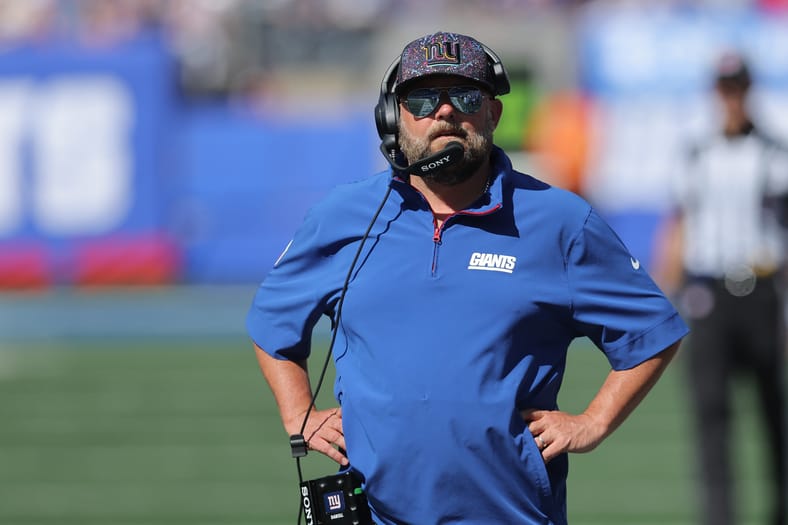
Daboll represents the most proven, high-profile option on this list. His work in Buffalo, transforming Josh Allen from a raw prospect into an MVP candidate, remains one of the defining quarterback development success stories of the past decade.
Even during a turbulent tenure in New York, Daboll’s strengths — adaptability, accountability, and offensive creativity — remained evident. He’s known for tailoring schemes to personnel, rather than imposing rigid systems.
For a Chargers team seeking urgency, edge, and clarity, Daboll’s demanding style could reestablish offensive identity and sharpen internal accountability.
6. Todd Monken — Former Ravens Offensive Coordinator
Monken offers familiarity and experience. After replacing Greg Roman in Baltimore, Monken oversaw a 13–4 season and an AFC No. 1 seed. While his playoff play-calling drew criticism, his broader résumé — including national championships at Georgia and offensive success at multiple NFL stops — remains impressive.
Monken has head-coaching experience, deep collegiate ties, and a proven ability to modernize offenses. The question is ceiling: whether he can elevate a Herbert-led offense beyond efficiency into true dominance.
What the Chargers Are Really Looking For
This hire is about more than replacing Greg Roman. It’s about alignment.
The Chargers need an offensive coordinator who can adapt protections behind an injury-prone line, maximize Herbert’s arm talent, and evolve week-to-week — not just scheme-to-scheme.
Harbaugh’s decision will reveal how aggressively the Chargers intend to chase a championship — and whether they believe the answer lies in experience, innovation, or a blend of both.
One thing is clear: standing still is no longer an option.