


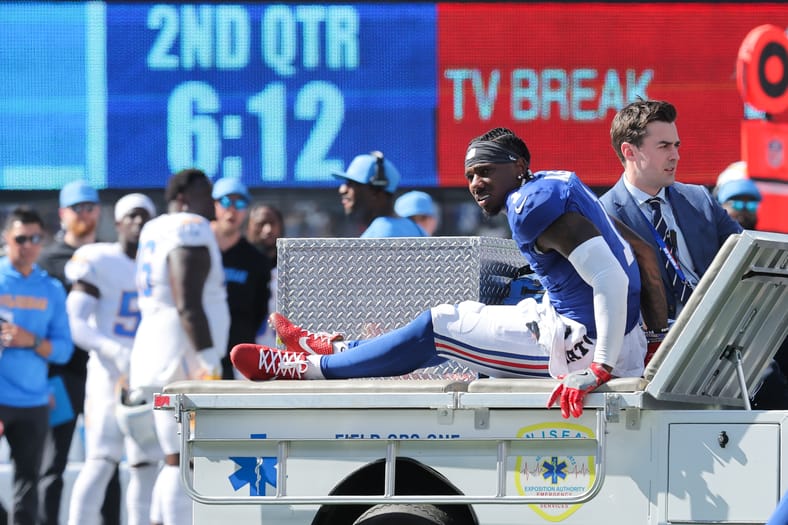
Injuries are an unfortunate reality in the NFL and can happen anywhere at any time, even in practice. On Sunday at MeLife Stadium, two of the NFL’s youngest stars, Giants Malik Nabers and Chargers Joe Alt, were carted off the field with injuries.
However, Sunday’s game shone a spotlight on a much bigger issue that has plagued the NFL for decades: injuries on turf fields.
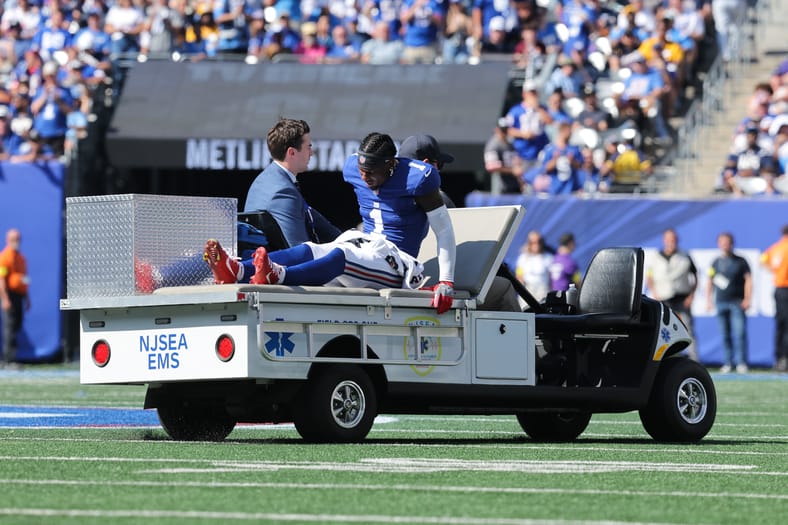
Even though MetLife Stadium is the most notorious culprit for causing season-ending injuries, this has become a league-wide issue as more players are suffering career-altering injuries due to the increase in artificial turf fields around the league.
This article will examine whether there really is a higher injury rate on turf fields vs grass fields and why the NFL is unlikely to do anything to rectify this situation.
MetLife Stadium
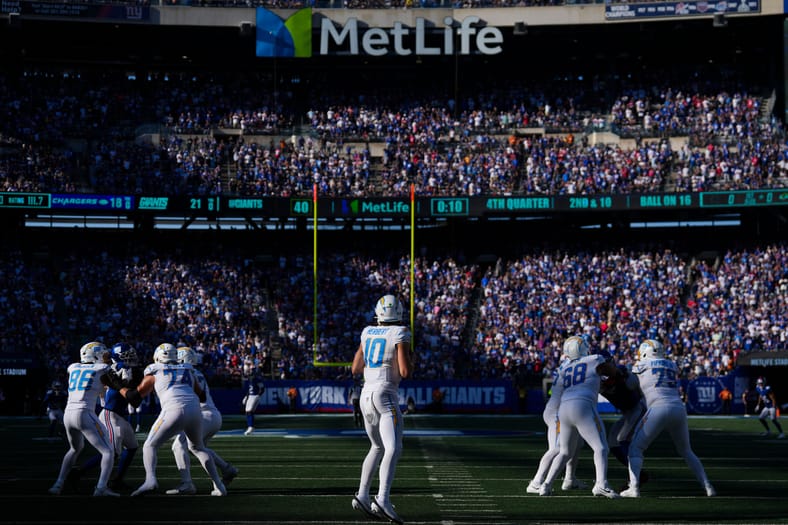
Dubbed by some as the injury capital of the NFL, MetLife Stadium has received intense scrutiny because it is the site of an unprecedented amount of career-altering injuries.
These injuries include Nick Bosa tearing his ACL, Solomon Thomas tearing his ACL, Raheem Mostert spraining his MCL, and Jimmy Garoppolo suffering a high ankle sprain. These injuries all occurred in just one game between the 49ers and the Jets in 2020.
The quality of the turf at MetLife is notoriously very poor, causing an avalanche of major injuries to stars such as cornerback Kyle Fuller, tearing his ACL, defensive end Jalean Phillips tearing his achilles, wide receiver Odell Beckham fracturing his ankle, and most famously, quarterback Aaron Rodgers tearing his achilles on his very first play on the MetLife Stadium turf.
Check Out Our Custom LA Sports Merch HERE
After Nick Bosa tore his ACL at MetLife, his career has forever changed, as he went from an NFL iron man to a player who cannot stay healthy, tearing his ACL again this season.
Similarly, after Odell Beckham’s ankle fracture, his career was never the same, as Odell could never stay consistently healthy even after leaving the Giants, and is now out of the league at just 32 years old. Odell took to Twitter to speak up on behalf of Giants WR Malik Nabers after Nabers tore his ACL at MetLife this past Sunday.
Odell is one of many players who have voiced their displeasure with turf fields, including Micah Parsons, Aaron Rodgers, Matthew Stafford, Nick Bosa, and the NFLPA have all voiced similar concerns regarding the safety of turf fields.
In an interview on the Sirius XM Let’s Go podcast on Wednesday, Los Angeles Rams quarterback Matthew Stafford voiced his displeasure with turf fields: “I wanna play on grass every chance I get. I’m an old man. I know how I feel after I play on grass versus how I feel when I play on AstroTurf. It’s night and day. I think, not only for the lower leg injuries, the stuff that’s happened at MetLife, but even for just slamming shoulders, slamming your head into it, whatever it is. Grass to me is a must… Hopefully, when I’m done playing, some of these younger guys will get to play on grass for the rest of their career.”
The Dangers Of Playing On Turf Fields
While it’s easy to point the finger at MetLife Stadium for its poor field quality, artificial turf fields around the NFL are equally as responsible for the staggering rise in injuries across the league.
As previously mentioned, the NFL is a violent game, and injuries can happen anywhere, including practice, preseason, on turf fields, grass fields, in the rain, in the snow, or even on a perfectly sunny day. This past Monday night was a perfect example, as all of America saw Dolphins receiver Tyreek Hill attempt to stand after a routine tackle on the grass at Hard Rock Stadium, only to find his knee had been completely dislocated.
Join Our Los Angeles Sports Community HERE!
However, is it really true that more injuries occur on turf as opposed to grass fields? According to an NBC article from last year, NFL commissioner Roger Goodell argued “some players prefer artificial turf,” and Goodell urged reporters to “trust the science.” Despite pushback from the NFLPA, turf stadiums continue to be built.
If Roger truly wants us to trust the science, let’s take a look at the data that unequivocally proves that more injuries occur on turf fields.
Take a look at this time-lapse of Detroit Lions stadium, Ford Field, installing a turf field in their stadium, notice anything? Watch the video closely, and you will notice that the turf is being installed on top of concrete. Meaning the only thing separating the players from playing on the same surface you would find on your local sidewalk is a thin layer of turf.
Whereas on a grass field, there is no concrete underneath the field, it is a natural layer of soil, which, of course, is not remotely as hard a surface as concrete. Is being tackled on grass like being tackled on a bed of pillows? Of course not, but there is no doubt that grass is a softer surface than turf, which is one of many reasons why there are statistically more lower leg injuries occurring on turf than on grass.
Now, let’s dig into the data, as there have been many scientific studies published that prove more injuries occur on artificial turf fields than on grass.
In an article published by Mass General Brigham, the article cites a study published by the Sage Journal analyzing 4,800 different foot and leg injuries that occurred in the NFL from 2012-2016. The study concluded that there would be over 300 fewer lower leg injuries if every NFL game were played on grass.
Mass General Brigham cites another study conducted by Sports Biomechanics in 2015, which analyzed the behavior of 19 different types of NFL cleats on both a grass and turf surface.
“Almost every cleat, when propelled by the same amount of force, created a divot into the natural playing surface. When applied to an artificial playing surface with the same force, all but one cleat held fast to the turf.”
This conclusion shows that cleats have a harder time pushing off on artificial surfaces as opposed to a natural grass surface, which is another contributor to the increase in lower leg injuries around the NFL.
Let’s look at one additional medical study conducted more recently in 2021 & 2022 by the National Library of Medicine. Their research shows that in 2021, there were actually more total injuries that occurred on grass than on turf. However, their data also shows that 40 of the 156 injuries that occurred on turf caused the NFL player to miss 6 or more games, versus only 37 of the 174 injuries on grass that caused the NFL player to miss more than 6 games.
In 2022, a staggering 230 injuries occurred on turf, and a whopping 63 of those injuries required the NFL player to miss more than 6 games, and 47 of those 63 injuries required surgery.
Viewer discretion advised, but here is an example of Cowboys quarterback Dak Prescott’s ankle fracture, which only occurred because his cleat got caught in the turf at AT&T Stadium, forever altering Prescott’s ability to run the ball effectively.
Final point on the perils of playing on turf fields is that not only is the surface unsafe to play on, but the chemicals needed to maintain artificial turf have been proven to cause cancer.
Cowboys Hall of Fame wide receiver Michael Irvin was a true warrior on the gridiron, only missing games due to a torn ACL early in his career and a league suspension. At just 33 years old, Michael Irvin suffered a career-ending neck injury on one of the most dangerous fields in NFL history at the old Veterans’ Stadium in Philadelphia (viewer discretion advised).
What looked like a routine play turned into a career-ending injury for Irvin as his head awkwardly hit the Veterans’ Field concrete like turf in Philadelphia, causing a neck fracture. But that’s not even the most tragic part of this story. According to a study conducted by the Philadelphia Inquirer, the Astroturf fields used by Veterans’ Stadium, made by Monsanto, have multiple “forever chemicals” that significantly increase an athlete’s likelihood of being diagnosed with cancer.
“The AstroTurf field used at Philadelphia’s Veterans’ Stadium, which was produced by Monsanto, contained 16 different types of forever chemicals or PFAS, known to cause a range of health diseases, including cancer… The reporters found that Phillies players who played at the Vet between 1971 and 2003 were roughly 300% more likely to be diagnosed with brain cancer than the average man of the same age and health.”
Monsanto has been in the news recently as part of a multi-billion-dollar lawsuit for using these forever chemicals in their product, RoundUp, used by everyday citizens to kill weeds on their lawns, causing thousands of people to be exposed to these harmful chemicals.
Even though the NFL has turned away from using Monsanto AstroTurf fields recently, it makes you wonder how many professional athletes received an untimely cancer diagnosis due to overexposure to these forever chemicals in AstroTurf fields.
In conclusion, it is an undeniable fact that artificial turf is a more dangerous playing surface than grass. Playing on artificial turf not only leads to more injuries, but there’s an even darker secret that athletes who play on turf are exposing themselves to cancerous chemicals.
How long will the NFL turn a blind eye to these facts? Depends on whether the owners are willing to reduce profits to increase player safety.
Player Safety Vs Profits
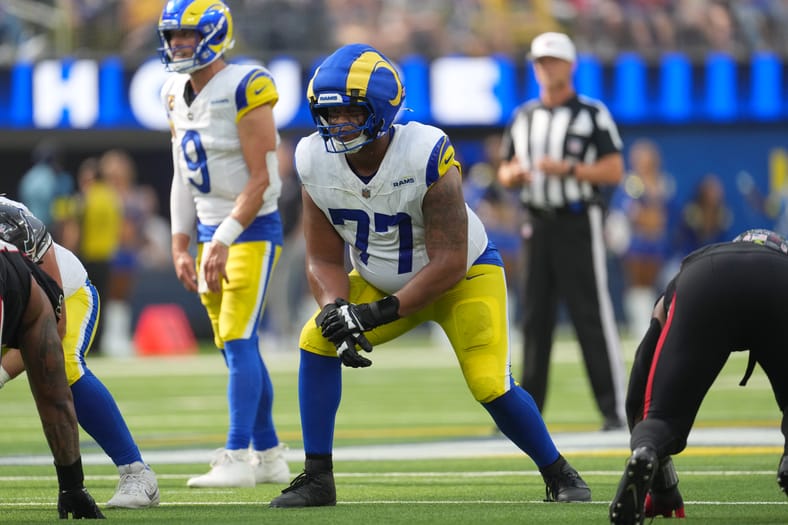
In 2015, the NFL settled a massive $1 billion lawsuit with hundreds of players who suffered life-altering concussions and struggled with CTE in their post-retirement lives. Suddenly, the NFL became more committed than ever to player safety, and to their credit, the NFL has successfully made a violent sport a little more safe. Eliminating late hits, inventing the guardian cap helmets, and banning hits to the head and neck area have all led to a safer league.
But does the NFL really care about player safety? It oftentimes does not seem that way. In 2006, the NFL began experimenting with Thursday Night Football games in a limited capacity. Seeing the spike in viewership, the NFL saw an opportunity and decided to include Thursday Night Football every week of the season.
Although Goodell and the NFL owners remain adamant that there is not an increase in injuries on Thursdays, what is evident is that transitioning from a Sunday to a Thursday game does not give players enough time to properly recover. That is why the quality of the games on Thursdays is often much worse than what we see on a Sunday or Monday game.
If the NFL truly cared about player safety, there would be no Thursday Night Football, but after signing a $1 billion TV deal with Amazon Prime, Thursday Night Football will be here to stay.
Another example of the NFL’s lack of concern for player safety is the increase in games overseas. The NFL has been strongly encouraging for more international games to boost profits, I mean, to attract more overseas fans and to grow the game on a global scale like the NBA.
The travel certainly cannot be good for these players’ bodies as the NFL has now added games in London, Ireland, Madrid, Berlin, Brazil, and Mexico City to seemingly no end in sight. If the NFL truly cared about its players and fans, it would keep these games on American soil.
The Cost Of Implementing Grass Fields

The NFL knows the data clearly proves that more injuries occur on turf fields. So you would think the league that claims to prioritize player safety would do all it can to switch to natural grass fields at all of its stadiums.
However, in 2025, the stadiums that use turf versus grass are split right down the middle; 15 – 15.
No NFL owner wants to see the athletes they signed to multi-million dollar contracts get injured, so what’s the real reason why they refuse to make the change?
Here’s a theory: NFL stadiums today are massive venues that cost billions to build but only play 7-8 home games per year. Although these NFL teams still make billions of dollars every year from TV revenue and ticket sales, there is still more money to be made from stadium revenue year-round.
Grass stadiums often sit empty for the remainder of the year to preserve the quality of their fields because running too many events can ruin the quality of the grass. However, that is not an issue for stadiums with turf fields; these stadiums can host as many events as they want, and the quality of the turf remains intact.
Take a look at an average Taylor Swift concert. This past year, Taylor Swift played 53 concerts across every NFL stadium in America. According to Sportico, an average Taylor Swift concert nets $4 million a night.
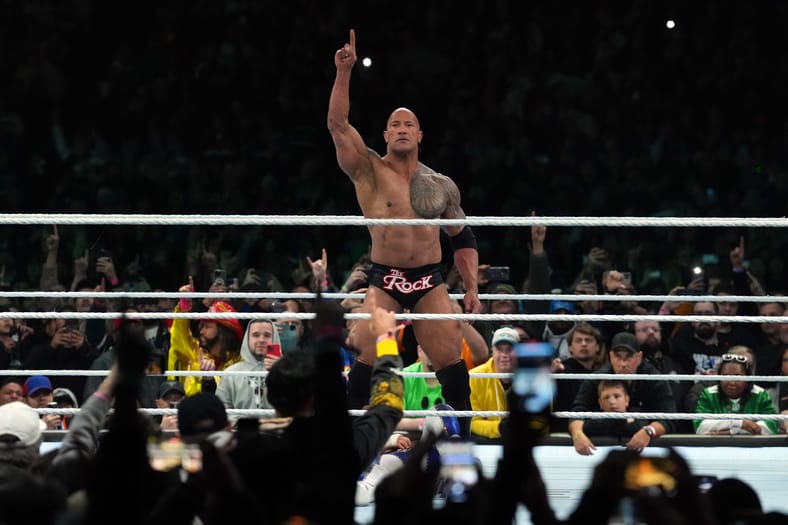
The point of mentioning Taylor Swift was not to call her out specifically, but to shine a light on the NFL ownership greed. Even though no NFL owner wants to see their players get injured, they would rather use turf fields so they can make more money in the long run. Plus, grass costs more to maintain, while turf fields require hardly any year-round maintenance.
In 2022, WWE’s Wrestlemania was live on the turf field at Dallas Cowboys’ AT&T Stadium, producing $17 million in ticket sales. In 2023, Wrestlemania turned a profit of $21.6 million in ticket sales on the turf field at SoFi Stadium in Los Angeles. These stadiums with grass fields cannot put on these kinds of massive events without completely destroying the quality of the grass, which is why more and more NFL stadiums are switching to artificial turf fields despite the increase in injuries around the NFL every year.
Will The NFL Do The Right Thing?
Ultimately, NFL owners value the all-mighty dollar over everything else. According to a Forbes article from 2023, it would only cost $12 million total for every team to switch to natural grass fields. Even though maintenance would be slightly more difficult, it would significantly decrease major injuries around the league.
Additionally, several NFL stadiums that use turf fields will often replace their turf with real grass when they host professional soccer matches because FIFA deems turf fields as non-regulation because of the safety hazard they pose for their athletes.
The NFL owners will keep turf fields as long as it is the most profitable option and they will only make the switch once their pockets are affected. The NFL continues to produce record revenue every year, so what would motivate owners to make any change?
Sadly, they will continue to do nothing to rectify the situation. Unless the NFL receives a lawsuit from the players, experiences a league-wide lockout orchestrated by the NFLPA, or a decrease in viewership, turf fields are here to stay. All it takes is the NFLPA to stand up and fight for the players, but we know that won’t happen.
Until then, we can just enjoy the games and accept the increase in injuries as the new normal in the NFL, even though it is a very solvable issue.