

If the Clippers world needed a reminder that wealth and fame don’t always translate to smooth sailing, consider this your memo. On one side, James Harden’s Houston-based restaurant, Thirteen, has been locked out by its landlord over more than $2.2 million in unpaid rent. On the other side, Clippers superstar Kawhi Leonard is facing allegations of getting paid for a “no-show job” with a charity linked to team owner Steve Ballmer.
James Harden’s Restaurant Locked Out as Kawhi Leonard Faces Clippers’ ‘No-Show Job’ Accusations

Support Our LA Firefighters In Style
For Harden, the problem is painfully tangible. A lockout notice sits on the door of Thirteen, located at 1911 Bagby Street, stating bluntly: “The door locks to the premises have been changed and the tenant shall be excluded therefrom due to non-payment of rent.” In other words, if the bill isn’t paid, don’t even think about walking back in. Despite the closure, reservations are still being accepted on OpenTable, giving diners hope that the restaurant might reopen soon.
Harden, who opened Thirteen in 2021 after requesting a blockbuster trade out of Houston, had rebranded the restaurant in 2024 with a new interior and an ambitious menu crafted by chef Siddartha Cadena. Plans for expansion reportedly existed, but for now, the Midtown hotspot’s future is as uncertain as Harden’s postgame meal plans when he returns to Houston with the Clippers in February.
Meanwhile, across the country in Los Angeles, Kawhi Leonard’s challenges are less about physical doors and more about the metaphorical ones of accountability. Documents revealed that Leonard received payments from a tree-planting service funded by Clippers owner Steve Ballmer, prompting questions of whether the superstar was being compensated for a job he never showed up for.
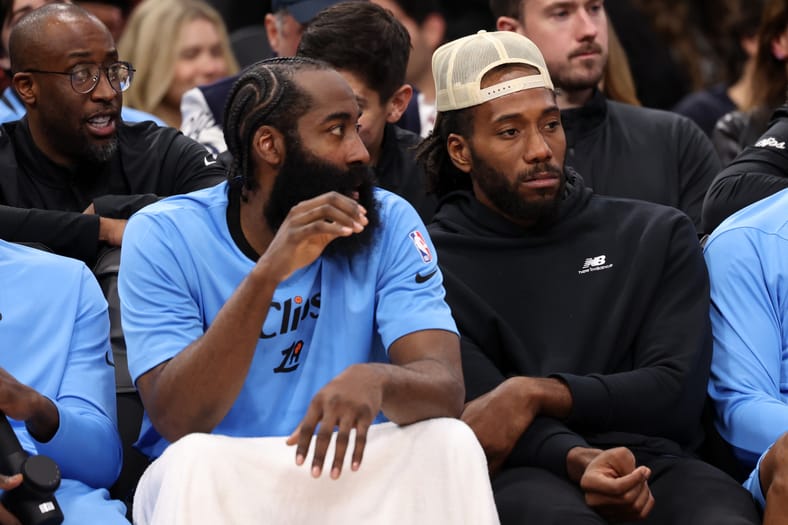
Payments went to Leonard’s advisor, Dennis Robertson, who had previously been investigated by the NBA. While the league found no prior misconduct, the optics of a $0-work “job” have stirred media frenzy. Stephen A. Smith, never one to mince words, weighed in on ESPN’s First Take:
“I have never seen a superstar do less to market and promote his team or promote the brand… If there’s a way to get money guaranteed without working, that’s what this brother has done,” Smith said, shaking his head at the situation.
Clippers management insists no salary-cap rules were violated, but the story remains a stark contrast to Harden’s predicament. One man can’t seem to pay his bills despite hundreds of millions in earnings, while the other allegedly gets paid for…well, not doing much at all.
In Houston, the lockout notice hangs, the tables sit empty, and the kitchen remains dark. In LA, the press conference podiums remain lit, cameras rolling, as lawyers and PR teams prepare for whatever comes next.
The NBA may be full of luxury boxes, multimillion-dollar contracts, and private jets, but for Harden and Leonard, it turns out there’s no escaping the very human pitfalls of money management, labor, and public scrutiny.
And just like that—the story abruptly ends.