

The 2025 World Series between the Los Angeles Dodgers and the Toronto Blue Jays is not just a championship series; it is a statistical anomaly—a rare, strength-on-strength battle where both teams have performed at a historically elite level this postseason. The series will be decided by one central question: Can the Toronto Blue Jays’ contact-and-power-driven lineup sustain its slugging against a Los Angeles pitching staff that has achieved unprecedented postseason dominance?
Here is the deep-dive statistical and scouting context that will define the matchup.
Key Metric I: The Dodgers’ Historic Pitching Masterclass

The Los Angeles Dodgers’ run to the World Series has been marked by a pitching performance that rivals some of the greatest rotations in playoff history. Their ability to manage opponent contact and rely heavily on their elite starting rotation has rendered their previously “suspect” bullpen almost irrelevant.
Support Local and Independent Sports Writing – Subscribe To the LAFB Network Today!
Dodgers Pitching Key Metrics (2025 Postseason):
| Metric | Stat | Context/Significance |
| Opponent OPS | .531 | 3rd lowest of any postseason team playing at least seven games since 1969. |
| Opponent Slugging | .269 | 2nd lowest of any postseason team playing at least seven games since 1969. |
| Starters’ ERA | 1.40 | 3rd lowest by a team’s starters through the first 10 games of a single postseason since 1913. |
| Starters’ Innings | 69.9% | The percentage of the Dodgers’ total innings thrown by their starting rotation (Blake Snell, Yoshinobu Yamamoto, Tyler Glasnow, and Shohei Ohtani) — a stark deviation from the modern bullpen-heavy trend. |
| Opponent Batting Avg. (NLCS) | .118 (vs. Brewers) | The lowest batting average allowed in a series of at least three games in postseason history. |
| Whiff Rate (Starters) | 39.4% | The highest mark in a single postseason during the pitch-tracking era (min. 400 swings), illustrating an unparalleled ability to generate swing-and-miss. |
Scouting & Advantage: The Dodgers’ advantage stems from their strategic pitching mix. While the Blue Jays feast on fastballs, L.A.’s staff only throws them 48% of the time. Opponents are hitting a meager .154/.211/.217 against the Dodgers’ non-fastballs (breaking and offspeed pitches)—the best performance by a pitching staff this October. The plan is clear: force the chase, and do so with nasty secondary offerings.
Support Our LA Firefighters In Style
Key Metric II: The Blue Jays’ Historic Offensive Firepower

While the Dodgers stifle contact, the Blue Jays boast a lineup that does two things exceptionally well: make contact (lowest regular season K-rate) and hit for staggering power. Toronto is not just a “small-ball” team; they are one of the most productive offensive groups the postseason has ever seen.
Blue Jays Hitting Key Metrics (2025 Postseason):
| Metric | Stat | Context/Significance |
| Team OPS | .878 | 6th highest of any postseason team playing at least seven games since 1969. |
| Team Slugging (SLG) | .523 | 4th highest of any postseason team playing at least seven games since 1969. |
| Out-of-Zone AVG (O-Zone AVG) | .293 | Batting .293 on pitches outside the strike zone. This is wildly above the 2025 postseason average of .136 and is the best by any postseason team since pitch tracking began in 2008. |
| Fastball Performance | .297/.360/.500(AVG/OBP/SLG) | Toronto is the best team in October against fastballs, which they’ve seen a postseason-high 65% of the time. |
| Elite Velocity Whiff Rate | 17.5% | The best in baseball against pitches 95 mph or higher, indicating they are not easily overpowered by heat. |
Export to Sheets
Scouting & Advantage: Toronto’s advantage is its ability to perform damage on “bad pitches.” The .293 O-Zone AVG is a staggering metric that means the Dodgers’ strategy of forcing the chase outside the zone might be less effective than it was against other NL opponents. Key contributors include Vladimir Guerrero Jr., who enters the Fall Classic on an all-time tear, hitting .442 with 6 home runs in the 2025 postseason, complementing his established career postseason excellence (.320 AVG, 4 HR, 11 RBI in 13 career games).
Crucial Player Matchups and Strategic Edges
Scouting reports for this series will hinge on two pivotal components: the starters’ dominance and the bullpen vulnerability.
The Starting Pitchers vs. The Unknown
- Blake Snell (Game 1 Starter): Snell has been lights-out in October (0.86 ERA, 21 IP, 28 K, only 2 R/6 H allowed). His ability to limit walks, a historical issue, will be paramount against a Blue Jays team that likes to swing. If Snell continues his dominance, the Blue Jays must win four of the five games he does not pitch.
- Trey Yesavage (The Rookie): The 22-year-old starter has sped through five levels of the minors this year and has been granted eligibility for the World Series. He has only six MLB career games. The Dodgers’ veteran lineup, featuring Mookie Betts, Freddie Freeman, and Max Muncy, will look to exploit this lack of experience and exposure early in the series.
Left-Handed Power vs. The Blue Jays’ Staff
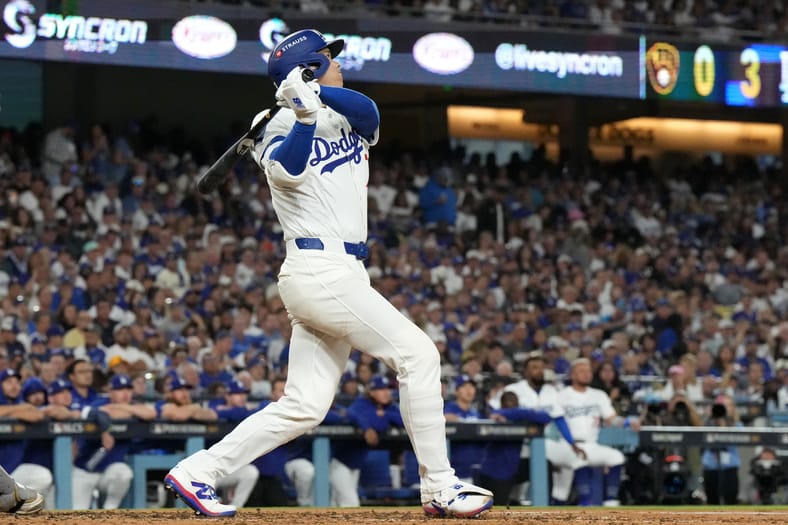
LA’s left-handed trio of Shohei Ohtani, Freddie Freeman, and Max Muncy is the single greatest threat to Toronto’s pitching staff, which is all right-handed in the rotation. Ohtani, in particular, enters the Series off an NLCS-clinching performance, proving his two-way star power in high-leverage moments.
Toronto’s management will rely heavily on their few left-handed relievers (such as Brendon Little) and workhorse right-hander Louis Varland (who has pitched in 10 of 11 postseason games) to navigate these matchups in the later innings. Any wobble by closer Roki Sasaki—who had a rare shaky outing in the NLCS but owns a 99.2 mph fastball and a 50% whiff-rate splitter—would force the Dodgers into the weaker parts of their bullpen and give the Jays a strategic opening.
| Strategic Matchup | Dodgers Advantage | Blue Jays Advantage |
| Pitching Strategy | Best performance against offspeed/breaking pitches in October (.154/.211/.217). | Best performance hitting pitches outside the zone since 2008 (.293 O-Zone AVG). |
| Top Hitter | Shohei Ohtani’s two-way ability and momentum. | Vladimir Guerrero Jr.’s current tear (.442 AVG, 6 HR in 2025 postseason). |
| Starter Stability | Blake Snell’s historic run (0.86 ERA, 28 K in 21 IP). | LA needs to pitch around Blue Jays’ relentless contact (low K-rate lineup). |
Ultimately, the 2025 World Series is a test of will and execution at the extremes of modern baseball: Can an offense built for contact and power (Jays’ .878 OPS) keep doing damage against a pitching staff that has statistically shut down opponents better than almost any in playoff history (LA’s .531 Opponent OPS)? The team that wins the war for the edges of the strike zone will take the Commissioner’s Trophy.