

The Los Angeles Dodgers are one of Major League Baseball’s crown jewels—storied, star-studded, and synonymous with greatness. From Brooklyn to Los Angeles, the organization has developed, acquired, and celebrated some of the finest players ever to wear a uniform. But when it comes to identifying the greatest Dodgers All-Stars of all time, we’re not only talking about franchise legends—we’re also spotlighting those whose brilliance shone brightest during the Midsummer Classic.
This list, ranked from 15 to 1, weighs both a player’s Dodgers legacy and their All-Star Game impact. These aren’t just great players. These are Dodgers who defined eras, carried their teams, and, in many cases, defined the All-Star Game itself.
The 15 Greatest Los Angeles Dodgers All-Stars of All Time, Ranked
15. Jeff Shaw (1998)
This spot isn’t about stats—it’s about symbolism. When Shaw was traded to the Dodgers just days before the 1998 All-Star Game, he hadn’t even donned Dodger blue before appearing in the Midsummer Classic. It was his Dodgers debut, pitching the eighth inning for the National League at Coors Field. Though he gave up a run, the moment captured the bizarre and beautiful unpredictability of baseball—and gave the Dodgers one of the most unique All-Star appearances in franchise history.
14. Mickey Owen (1942)
Best known for a costly passed ball in the 1941 World Series, Owen flipped the narrative in the 1942 All-Star Game at the Polo Grounds. Pinch-hitting in the eighth inning, Owen launched the first home run ever hit by a Dodger in the All-Star Game. It wasn’t just a solo shot—it was the National League’s only run of the game. Owen didn’t need a lengthy resume of All-Star dominance to make history.
13. Shohei Ohtani (2024)
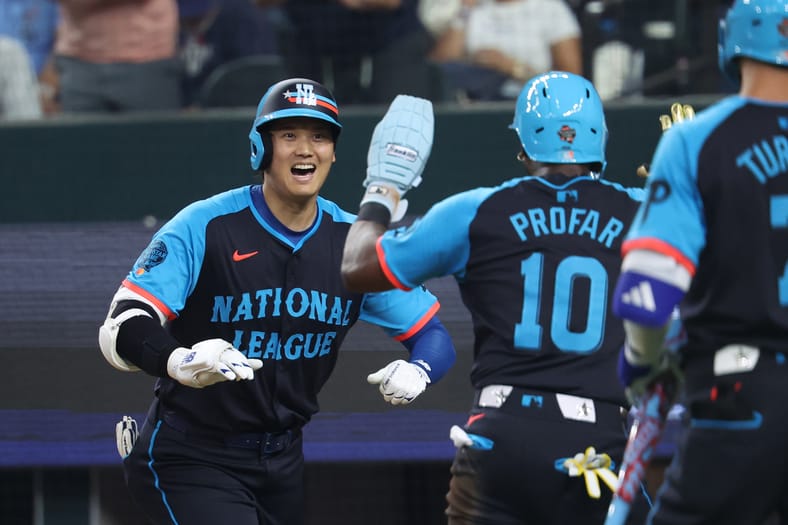
Ohtani’s Dodger career is still unfolding, but his 2024 season alone earns him a spot. With a torn UCL preventing him from pitching, Ohtani focused solely on hitting—and proceeded to author one of the greatest offensive seasons in MLB history. He became the first player ever to hit 50 homers and steal 50 bases in a single season. He set Dodgers single-season records for homers (54) and WAR (9.2), won a Silver Slugger, and helped lead Los Angeles to a World Series title in his first year. He’s not just an All-Star—he’s an evolutionary leap.
12. Ron Cey (1981)
Cey was the steely presence at third base during the Dodgers’ late-70s and early-80s runs. A six-time All-Star, he capped his Dodgers tenure with a World Series MVP in 1981. During that postseason, Cey drove in nine runs, including three in the Fall Classic. With a steady bat and reliable glove, Cey defined consistency and toughness for a generation of Dodgers fans.
11. Carl Furillo (1950s)
Often overlooked, Furillo was a core figure of the Boys of Summer. The right fielder and two-time All-Star was a batting champion (1953), clutch run-producer, and outfield artist. His impact in All-Star Games was more subtle than seismic, but his presence was a constant in one of the most celebrated Dodgers lineups ever.
10. Willie Davis (1960s–70s)
A speedster with sneaky pop, Davis was a two-time All-Star and three-time Gold Glove winner who played 14 seasons in Dodger blue. While his All-Star Game moments don’t leap off the page, his overall contributions—including 2,091 hits and 335 stolen bases for L.A.—cement his legacy as one of the franchise’s most dynamic outfielders.
9. Duke Snider (1954 All-Star Game)
Snider’s 1954 All-Star Game performance stands as one of the finest in Dodgers history. Batting third, he went 3-for-4 with a double and two runs scored. He remains the only Dodger with three hits in an All-Star Game. Beyond the single game, Snider was an eight-time All-Star who led the team in homers (389) and RBIs (1,271), helping the Dodgers to six pennants and two titles.
8. Maury Wills (1962)
In a season where he broke Ty Cobb’s stolen base record, Wills made more history by becoming the first All-Star Game MVP. Entering as a pinch-runner for Stan Musial, he stole second and later scored. Then, he added a single and scored again. Wills turned the game with his legs—just as he had revolutionized the sport.
7. Don Drysdale (Multiple All-Star Games)
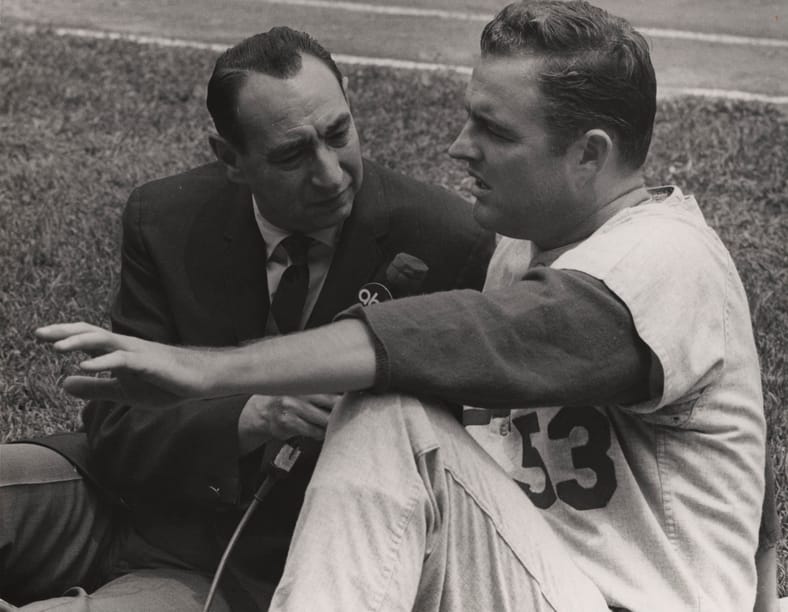
Drysdale’s All-Star legacy is one of dominance over time. In eight appearances, five of them starts, he posted a 1.40 ERA over 19.1 innings with 19 strikeouts and just four walks. His 1967 appearance was emblematic: two scoreless innings in extras, followed by a win when Tony Perez homered. He was both a star and a stopper.
6. Don Sutton (1977 All-Star Game)
In the Bronx, facing an American League lineup loaded with Hall of Famers, Sutton shut them down. Three scoreless innings. One hit. Four strikeouts. All-Star MVP. It was his final All-Star Game and a defining exit. With 233 Dodgers wins and a 1.94 All-Star ERA, Sutton bridged the Koufax-Drysdale era into a new one—and did so with brilliance.
5. Steve Garvey (1974, 1978 All-Star Games)
Garvey didn’t just play in All-Star Games—he owned them. In 1974, he was a write-in selection. Then he went 2-for-4 with a run and an RBI and won MVP. In 1978, he tripled and drove in two, again winning MVP. He hit .393 across 10 All-Star Games with two homers and a .821 slugging percentage. The stage never seemed too big.
4. Fernando Valenzuela (1986 All-Star Game)
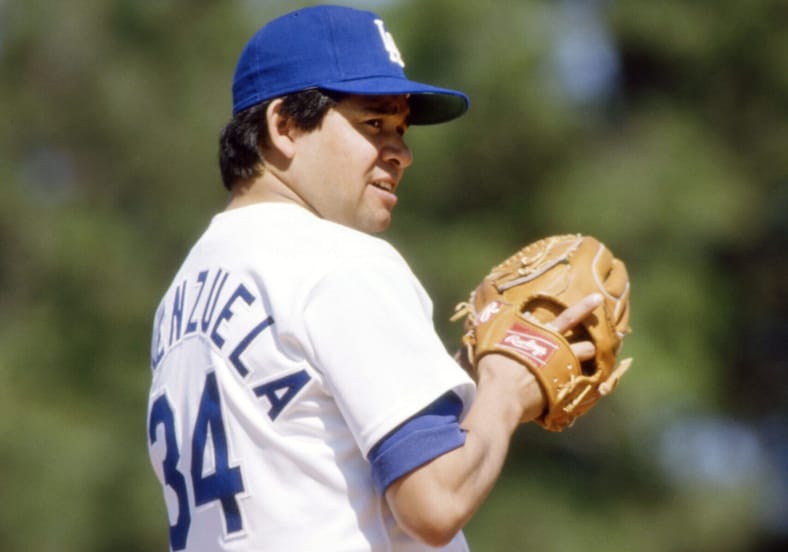
In Houston, Valenzuela entered after Dwight Gooden and struck out five straight batters—including Hall of Famers Don Mattingly, Cal Ripken Jr., and Reggie Jackson. He tied Carl Hubbell’s All-Star strikeout record and reminded the world why “Fernandomania” was more than hype. With a 1.59 ERA across six All-Star Games, Fernando always belonged on the big stage.
3. Mike Piazza (1996 All-Star Game)
It’s hard to overstate Piazza’s power in this game. A 445-foot homer off Charles Nagy followed by an RBI double off Chuck Finley led the National League to a 6–0 win. He became just the third catcher ever to win All-Star MVP honors. Piazza hit .333 in All-Star Games as a Dodger and became one of the most dangerous offensive catchers in baseball history.
2. Jackie Robinson
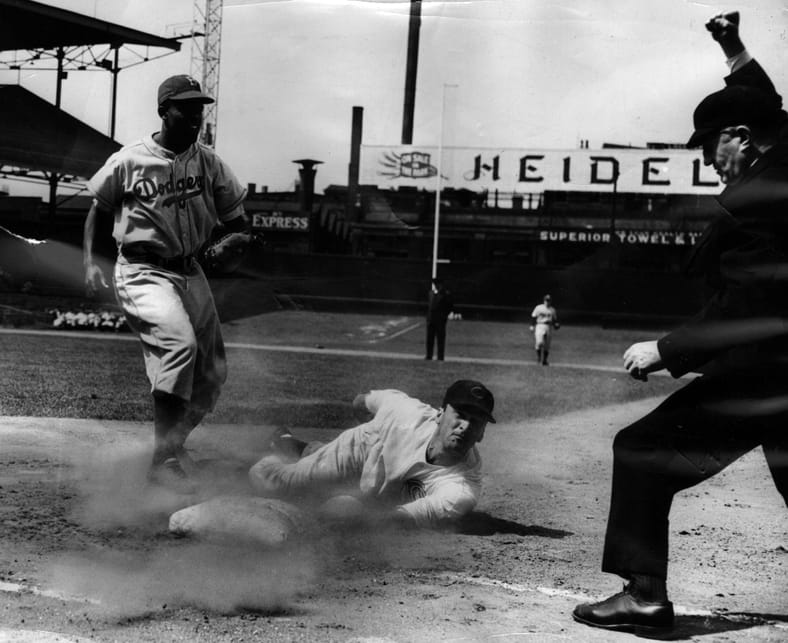
The numbers alone put Robinson in any all-time Dodgers list: seven-time All-Star, 61.8 WAR, 947 runs, 203-hit MVP season in 1949. But his All-Star appearances—seven in a row from 1949 to 1955—were layered with deeper meaning. Each selection was a reaffirmation of his place in the sport he integrated. And each performance was a masterclass in speed, smarts, and strength.
1. Sandy Koufax
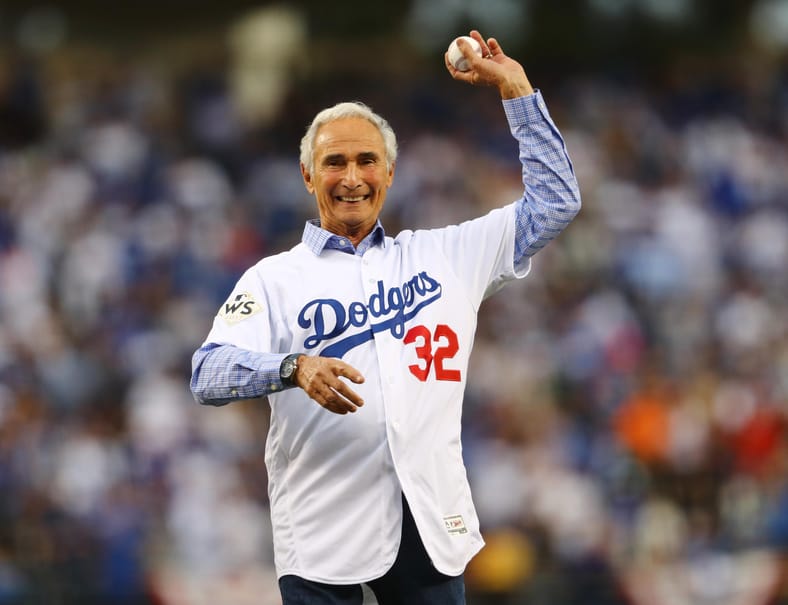
There is only one choice for No. 1. Koufax’s peak from 1961 to 1966 is one of the most dominant stretches in baseball history. Three Cy Youngs. Five straight ERA titles. Four strikeout crowns. A 0.95 postseason ERA. He was also a seven-time All-Star and the unquestioned ace of his era. He didn’t just perform under pressure—he suffocated it. And he did it all with an aura that has never left the franchise.
Honorable Mentions: Roy Campanella, Gil Hodges, Pee Wee Reese, Clayton Kershaw, Mike Marshall (1984), Yasiel Puig (2014 voting), Matt Kemp, and Zack Greinke all had worthy cases. But to make the top 15, you needed more than just numbers. You needed to matter—when the lights were brightest, the stars were out, and the game was watching.
These 15 did.